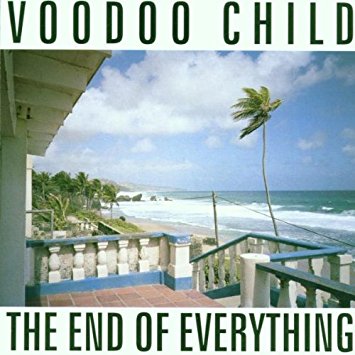
Album Cover

Voodoo Child The End Of Everything LP – CD Trophy Records

23,5 € delete

Subtotal

42,5 €

Shipping and final taxes will be calculated at checkout
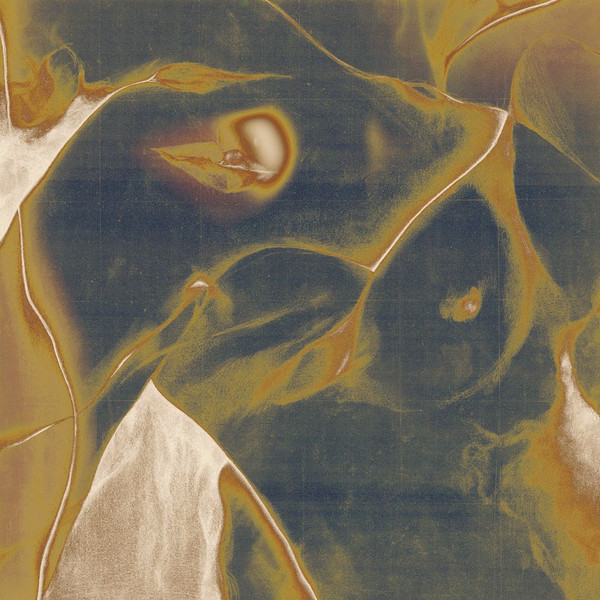
Mélanie Chédeville Cri D'Amour

While it can be said that The Who’s Tommy and Quadrophenia, Pink Floyd’s The Wall and Lou Reed and John Cale’s Songs For Drella were designed from the ground up, that’s not necessarily the case for equally mythical, yet composite, albums such as Bowie’s The Rise And Fall of Ziggy Stardust and the Spiders From Mars and Diamond Dogs, or Lou Reed’s Berlin. In France, the genre established its pedigree in the 1970s with Gainsbourg’s Histoire de Melody Nelson and L’homme à tête de chou, then in the early 1980s with Léo Ferré’s L’Opéra du pauvre. Mélanie Chédeville’s Cri d'amour adds to this list of albums that tell a story through characters. Cri d'amour was produced in a seaside setting, which may explain its flowing, organic character – and the fact that it deviates from electronic music in spite of its title’s homophony with Guy-Manuel De Homem Christo (of Daft Punk fame) and Éric Chédeville’s foundational French Touch label Crydamoure. This fact might not be so fortuitous since the name was, among other things, about the deep friendship between the two boys – and its brutal end, which was not without repercussions. Repercussions on the couple, then on Mélanie’s decision to make it on her own artistically. Because it is all by herself that the violinist-by-training composed, wrote and arranged this collection of string-drenched songs that recall Jean-Claude Vannier’s work for Serge Gainsbourg. The latter would undoubtedly have been impressed by Mélanie’s fine-cut lyrics and melodies that are as raw as they are sophisticated, vocalized in a sprechgesang recalling his own. The deliberately retro palette, up to the bass sound so typical of 1960s English rock, betrays an artist indebted to the creator of Bonnie & Clyde and Initials B.B. through a sensual, clear tonality. Yet, polyrhythms borrowed from the late afro-beat legend Tony Allen, and the touches of guitar, piano, percussion and synthesizers distilled here and there by Éric and Mélanie, end up giving the whole affair a resolutely atemporal color. “I am a fairly modest person,” she explains. “I wanted the songs on this album to be heard in different ways, according to each person’s sensitivity. I wrote this album during a period of great solitude and existential questioning. It tells the story of a couple in crisis, one that anyone could relate to. But it does not respect the chronology of events and mixes dream with reality.” The cry of love from Mélanie to Éric Chédeville, appears, in fact, only on C'est dans l'air, the album’s eleventh track: an appeal, in words and music – a somewhat cruel missive that turned successful, since they found each other, on the stage and in life, and her paramour ended up producing this (rather elegant) record. The LP begins with an apostrophe: “Mélanie is talking to you tonight, and she's fed up.” It is the primitive scene, the initiatory trauma. In the midst of a rave, the heroine sees the one she loves disappear into the neon-lit crowd, which she associates with nothingness, to lose himself in the false pretenses of social platitudes and synthetic paradises. Mélanie was sixteen with a head full of Beethoven and Brahms when she succumbed to an unexpected fascination for the world of Éric, a pianist, composer and sound engineer, who regularly delivered scores for Marc Dorcel’s X-rated films. She evokes him in L'Alpha-bêta and Le Pornographe, through whispered choruses, that would suit the late Julee Cruise or Vanessa Daou to a tee, and explicit allusions to a “sword of Damocles” of “XXL” dimensions. These are not the only texts on this album that remind us of the Franco-American author Anaïn Nin’s erotic poems, a model that Mélanie willingly takes on, adding to the list of her literary influences alongside Apollinaire and his Debauched Hospodar: “I would not have been able to choose the words, and to create the female character of the record, if I had not drawn from multiple musical and poetic sources.” She proves this, again, on It's Not Too Late, built on a sample from Scott Walker's Montaigu Terrace (In Blue), in which she reveals Éric Chédeville’s voluntary internment after he learned that she was going to leave him. This Folia that ultimately contaminated even the psychiatrist who was supposed to help them is found in the twirling strings of her Belle histoire with the Ulysses-like musician, so well described in an aquatic Nausica that is carried by a choir of sirens. The orphic journey ends, after thirteen tracks, with Folk Silencio, whose harmonic writing is imbued with a wild romanticism, and whose radiant organs have nothing to envy to Moody Blues classics. Then, with Les Croisés, an epic bolero by way of epilogue, in which the beauty, finally delivered from her torments, comes back to the story to deliver its moral: we must be grateful to the vicissitudes of life, because they teach us much about the power of love. Some may find this album old-fashioned, which, far from being a flaw, is a credit to the fine musician that Mélanie is. Others will call it a charming album, which is not a bad way to describe it, provided that it is a powerfully relentless charm.
  • Cri D'Amour
LP IN
stock
26€ Buy

Newsletter

Subscribe for Materia Prima good news.